M&A Advisory Fees in India: Retainers, Success Fees and Minimums
 Due Diligence
Fees are the least discussed part of M&A consulting, and that silence costs founders money. Most first time sellers sign a mandate letter without knowing which terms are standard, which are negotiable and which quietly decide the total cost of the deal. This guide explains how M&A adviser fees are structured in India: retainers, success fees, minimum fees, tiered and ratchet structures, tail periods and expenses. It does not quote a universal rate, because none exists, but it shows what to compare and what to negotiate.
Key Takeaways
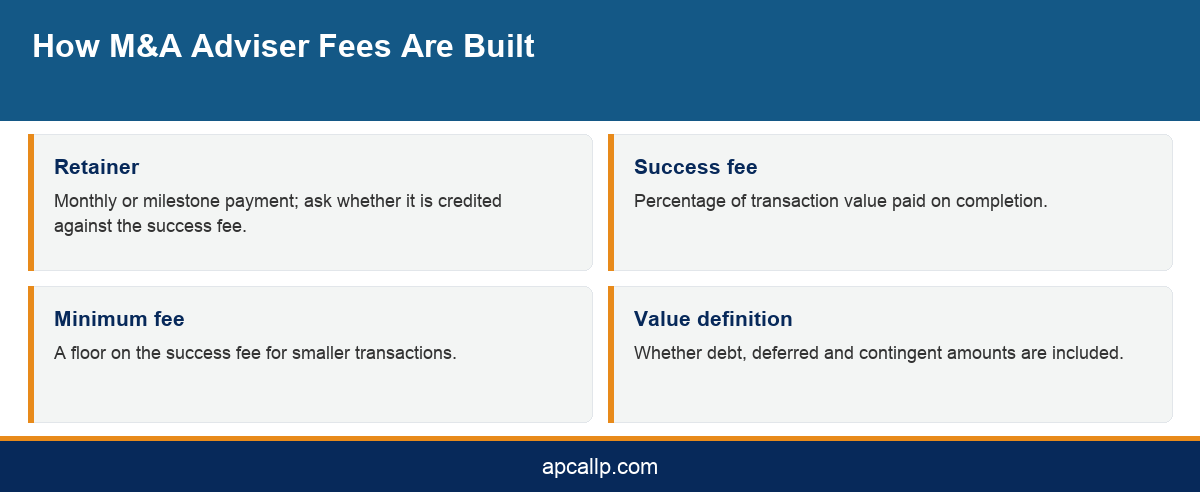
- M&A consulting fees usually combine a retainer with a success fee paid on completion, often with a minimum fee for smaller deals.
- How transaction value is defined, including debt, deferred and contingent consideration, matters as much as the percentage itself.
- Negotiate the tail period, expenses and termination terms at the start, while you still have leverage.
The Retainer: Paying for Work Done
A retainer is a monthly or milestone payment that covers the adviser's work whether or not the deal completes. It compensates the adviser for preparation, buyer outreach, documents and meetings, and it signals the client's commitment to the process.
Retainers vary with the scope and the size of the team. Many mandates credit some or all of the retainer against the success fee if the deal completes, which reduces the total cost of a successful transaction. Ask whether the retainer is creditable before you sign.
A very low or zero retainer is not always good news. It can mean the adviser will prioritise other mandates, or that the success fee has been set higher to compensate. Judge the package as a whole rather than one line in isolation.
Milestone retainers are a useful middle path. Payments are linked to defined steps, such as completion of the information memorandum, the first round of buyer meetings and receipt of offers. The client pays as progress is made, and the adviser is rewarded for keeping the process moving.
The Success Fee and How Transaction Value Is Defined
The success fee is paid on completion and is usually a percentage of the transaction value. For smaller deals, a minimum fee often applies, so the adviser is paid a floor amount even if the percentage would produce less. In general, percentages fall as deal size rises.
The definition of transaction value is where many disputes start. Does it include debt assumed by the buyer? Deferred consideration? Earn outs that may never be paid? Value retained by the seller through rollover equity? Each choice changes the fee, so the mandate letter should define value precisely and say when the fee on contingent amounts is paid.
A sensible principle is that the adviser is paid on value when the client receives it. Fees on an earn out should usually be paid when and if the earn out is paid, not on its maximum at completion.
Buyers face the same question in reverse. A buy side success fee may be based on the price paid, which rewards the adviser for a higher price. Many acquirers prefer a fixed completion fee or one that rewards savings against an agreed price, so that incentives stay aligned with the client's interests.
Tiered Structures, Ratchets and the Lehman Formula
Some mandates use tiered success fees, where different percentages apply to different bands of value. The best known historical example is the Lehman formula, which applied falling percentages to successive bands of deal value. Modern mandates rarely use it unchanged, but the idea of tiers survives.
A ratchet does the opposite: it increases the percentage on value above an agreed target price. Ratchets align the adviser with the seller's goal of a higher price, but they should be paired with clear terms on deal quality, so that the adviser is not rewarded for a high headline with weak protections.
Whichever structure you use, model the fee at three outcomes: a low price, the expected price and a high price. The table makes the incentives visible and avoids surprises at completion. Comparing the same three outcomes across proposals from different M&A consulting firms is the fairest way to judge them.
Tail Periods, Exclusivity and Termination
The tail period lets the adviser earn its success fee if the client completes a deal with a party introduced during the mandate, within a set period after the mandate ends. It protects the adviser from clients who end a mandate just before signing. It should be limited in time and to parties the adviser genuinely introduced or contacted.
Exclusivity is normal, but the client should be able to terminate for poor performance after a notice period. The mandate letter should say what fees are due on termination and how the tail applies afterwards. Our note on why acquirers decline attractive businesses shows how stalled processes often trace back to unclear mandates.
Conflicts deserve a clause of their own. If the adviser also works for likely buyers, the client needs to know before outreach begins.
Break fees can also appear. Some mandates entitle the adviser to a fee if the client walks away from a deal on agreed terms. Keep any such fee modest, tie it to clearly defined circumstances, and make sure it does not discourage the client from rejecting a deal that no longer makes sense.
Expenses, Taxes and Comparing Proposals
Expenses such as travel, data room software and printing are usually charged on top of fees, sometimes with a cap. Legal fees, regulatory valuations and diligence reports are normally separate engagements. GST applies to advisory fees in India and should be included when you calculate the total cost.
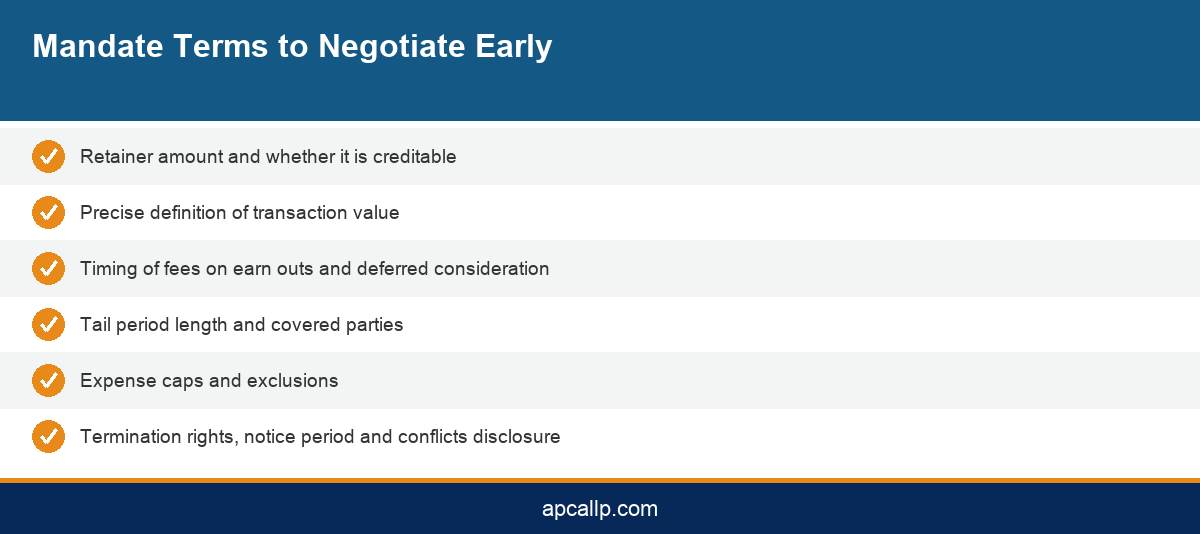
When comparing proposals, put every element on one page: retainer, creditability, success fee and minimum, definition of value, tiers or ratchets, tail period, expenses, exclusions and termination terms. Then compare the team, sector experience and process plan. M&A consulting is a service where the cheapest proposal can be the most expensive outcome.
Smaller companies often find chartered accountancy firms with deal teams more cost effective than large banks, because the same team can handle diligence readiness and finance work. Our note on investment banking for SMEs explains where each type of adviser fits, and our Bengaluru acquisition case study shows a mid market mandate in practice.
When Adviser Fees Are Worth Paying
Fees should be judged against what the adviser changes. In a competitive sale, a well run process can lift the price, improve the cash paid at completion and narrow the warranties and escrow. Those gains usually exceed the fee by a wide margin.
Advisers also prevent losses that are harder to see. A buyer that renegotiates late in the process, a working capital target set too high, or an earn out with loose measurement rules can each cost a seller more than any fee. Experienced M&A consulting catches these issues before they become binding.
The value is lower when a deal is simple, the buyer is known and the terms are standard. In that case a limited scope engagement, covering the price mechanism, the share purchase agreement and completion, may be enough. Our note on how finance leadership supports deal structuring explains how a smaller team can support such transactions.
Whatever the scope, ask the adviser to explain in writing how it expects to add value on your specific deal. A clear answer is the best evidence that the fee is justified.
Conclusion
M&A consulting fees are negotiable, and the details matter more than the headline percentage. Understand the retainer and whether it is creditable, define transaction value precisely, model the fee at several outcomes, and agree the tail period, expenses and termination terms before the process starts. Choose an adviser for experience and fit, then align the fee with the result you want. For a review of a mandate you have been offered, contact the APCALLP deal team.
Frequently Asked Questions
How are M&A advisers paid in India?

Is the retainer deducted from the success fee?
What does transaction value include for fee purposes?
What is a minimum fee in M&A consulting?
What is the Lehman formula?
How long should a tail period be?
Is GST charged on M&A advisory fees?
Can APCALLP review a mandate letter before I sign?