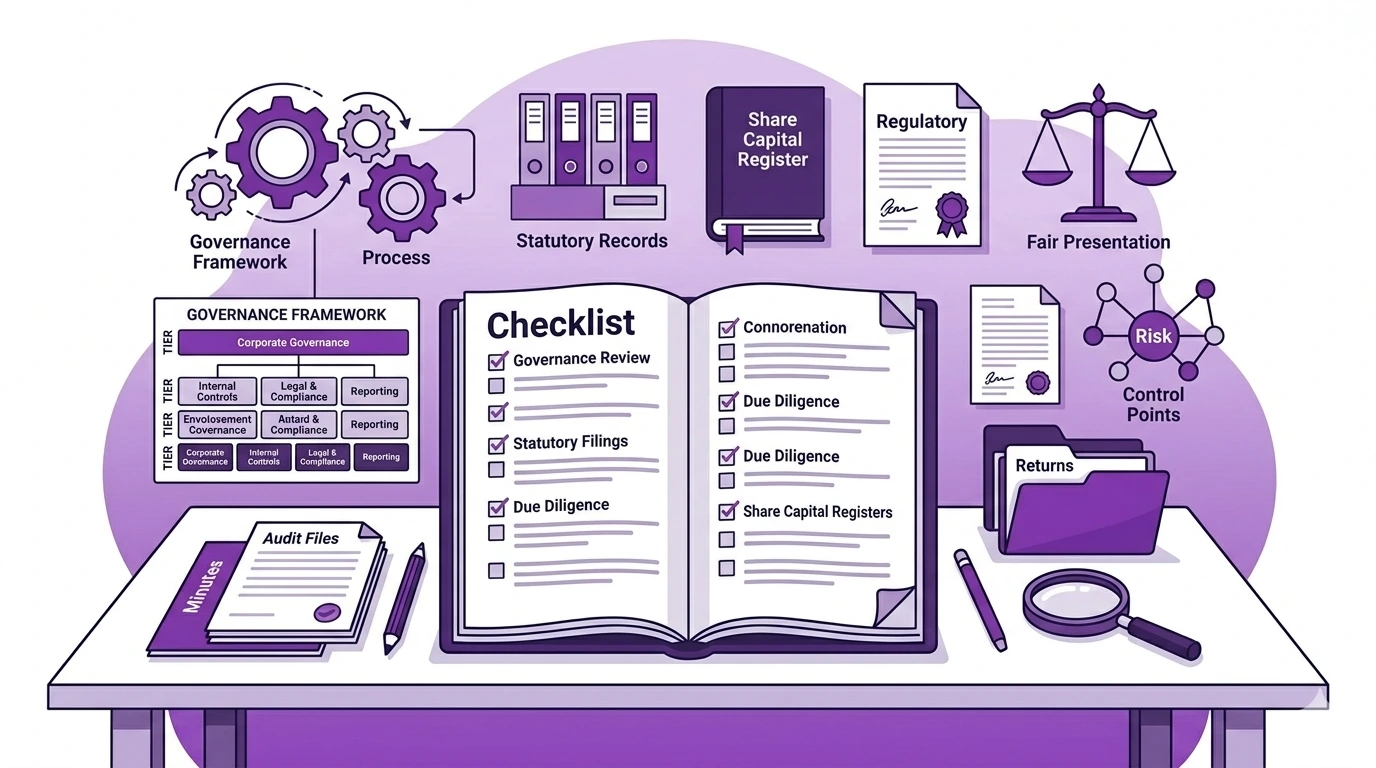
In India’s evolving regulatory and investment ecosystem, due diligence & transactional services india have become foundational for business continuity, valuation accuracy, and investor confidence.
Introduction: Why Due Diligence & Transactional Services India Are No Longer Optional
APCALLP, recognized among leading financial consulting firms and due diligence service providers in india, works closely with SMEs, startups, and foreign investors to establish compliance-led growth frameworks. Whether it is fdi consultants in india, ca advisors for startups in Kochi, or ca firms for foreign startups in Bangalore, the expectation today is clear: governance is no longer reactive, it is strategic.
Executive Summary
What was the challenge?
The client required a thorough assessment of its secretarial and regulatory compliance to identify gaps, mitigate risks, and ensure alignment with the Companies Act, 2013 and other applicable regulations.
What service did APCALLP provide?
Comprehensive secretarial due diligence, including review of statutory filings, registers, share capital structure, corporate records, and governance practices, along with actionable recommendations under due diligence transaction advisory frameworks.
What was the result?
A detailed due diligence report highlighting compliance gaps, risk areas, and corrective measures, enabling stronger governance, improved corporate valuation readiness, and sustained regulatory adherence.
Client Overview
Business Context and Regulatory Exposure
The client, an investment consultancy firm operating within financial advisory services, required alignment with financial advisory india standards and regulatory compliance frameworks. As a financial consultancy firm, its operational model involved high investor sensitivity, making compliance accuracy critical for maintaining its investment value proposition and credibility.
The Challenge: Where Governance Gaps Impact Valuation
Lack of Centralized Compliance Visibility
The absence of structured due diligence services india frameworks created fragmented compliance records. This impacted not only regulatory readiness but also valuation in business, as inconsistencies reduce investor confidence during funding or acquisition discussions.
Share Capital and Documentation Risks
Inconsistent share capital records and documentation gaps posed risks to corporate valuation and net valuation accuracy. For investment firms, even minor discrepancies can affect deal structuring and investment valuation outcomes, especially during due diligence in transaction scenarios.
Regulatory and Transaction Readiness Concerns
Without a structured compliance review, the organization faced potential exposure during audits, investor onboarding, or FDI evaluations. This is a common challenge addressed by best fdi consultants in india and financial consulting firms.
Our Approach: Structured Due Diligence & Transaction Advisory
Regulatory Mapping and Business Understanding
APCALLP began by aligning the client’s operations with applicable laws under Companies Act, 2013. This ensured that the financial advisor value proposition and compliance posture were aligned with regulatory expectations and future scalability.
Statutory and Secretarial Review
A detailed audit of ROC filings, statutory registers, and governance documents was conducted. This aligns with legal due diligence practices followed by top due diligence service providers in india, ensuring enforceability and accuracy.
Share Capital Reconciliation and Validation
Cross-verification between statutory records and financial documents ensured consistency. This step is critical in valuation methods, as discrepancies directly impact investor trust and total value proposition.
Key Pillars of Startup Due Diligence Applied
Financial Due Diligence
Validating Financial Accuracy and Sustainability
Financial due diligence involved reviewing financial statements, GST, TDS filings, and unit economics. APCALLP ensured that revenue projections aligned with operational realities, improving investment valuation credibility. This step directly supports financial planning value proposition by providing clarity on burn rate and financial sustainability.
Legal Due Diligence
Ensuring Regulatory and Contractual Integrity
Corporate records, shareholder agreements, and litigation exposure were assessed. Legal gaps often impact due diligence in transaction outcomes, making this step essential for investor confidence and compliance readiness.
Operational Due Diligence
Assessing Scalability and Process Efficiency
Operational frameworks were evaluated to determine scalability and efficiency. This is particularly important for financial consulting firms managing investor relationships and platform-driven operations.
Management and Governance Review
Evaluating Leadership and Decision Frameworks
Board minutes and governance practices were reviewed to assess transparency and decision-making integrity. Strong governance enhances corporate valuation and financial advisory services positioning.
Key Components of Due Diligence in India
Financial and Tax Due Diligence Integration
Analysis of financial performance, tax compliance, and liabilities ensured no hidden exposures. This aligns with industry standards followed by due diligence services in delhi and across india.
Operational and ESG Compliance
Operational efficiency and ESG compliance are increasingly influencing investment value proposition. APCALLP ensured alignment with these evolving benchmarks.
Transaction Advisory Services Delivered
Risk Identification and Deal Readiness
APCALLP provided buy-side advisory insights, helping identify risks that could impact negotiations or valuation. This aligns with practices followed by leading firms like PwC India in due diligence transaction advisory.
Post Deal Governance Structuring
Recommendations included governance improvements to support long-term scalability and compliance.
What Was the Outcome - The APCALLP way?
Quantified Governance and Compliance Improvements
Over 95 percent of statutory discrepancies were identified and addressed. Filing accuracy improved significantly, reducing regulatory exposure.
Enhanced Valuation Readiness
By aligning compliance and documentation, the client strengthened its investment valuation and corporate valuation positioning, making it more attractive for investors.
Improved Decision Making Framework
Management gained structured visibility into compliance and governance, enabling strategic decisions aligned with financial consulting firm best practices.
Why Due Diligence is Critical in India: 5 Gaps That Often Go Unnoticed
Hidden Financial Liabilities
Undisclosed Obligations and Impact on Net Valuation Accuracy
In many mid-sized firms and startups, liabilities are not always fully reflected in financial statements. These may include contingent liabilities, off-balance sheet exposures, deferred tax obligations, or vendor disputes. During due diligence & transactional services india, such gaps directly distort net valuation, enterprise value calculation, and EBITDA normalization.
From an investment valuation perspective, even a 5 to 10 percent undisclosed liability exposure can significantly impact deal pricing, leading to renegotiation or valuation haircuts. This is where financial due diligence services in india play a critical role in validating cash flow sustainability, working capital adjustments, and debt structuring accuracy.
Incomplete Legal Documentation
Contractual Gaps and Weak Enforceability Risk in Transactions
Incomplete or inconsistent legal documentation is one of the most overlooked risks in due diligence in transaction scenarios. Missing shareholder agreements, outdated board resolutions, unsigned contracts, or improperly executed employment agreements weaken enforceability.
For financial consultancy firms and investment advisory platforms, this directly impacts investment value proposition and deal certainty. In India’s regulatory environment, legal enforceability is a key determinant of risk-adjusted returns. Leading due diligence service providers in india focus on aligning documentation with Companies Act compliance, ensuring legal defensibility during disputes, audits, or investor scrutiny.
Tax Non Compliance Exposure
Direct and Indirect Tax Risks Affecting Valuation and Deal Structuring
Tax exposure is one of the most critical elements in due diligence services india. Non-compliance in GST filings, TDS deductions, transfer pricing regulations, or income tax assessments can create significant financial liabilities.
From a corporate valuation standpoint, unresolved tax issues often lead to escrow adjustments, indemnity clauses, or price reductions. In cross-border scenarios handled by fdi consultants in india, tax compliance becomes even more critical due to FEMA regulations and withholding tax implications.
A robust tax due diligence process ensures accurate liability provisioning, improves valuation in business transactions, and enhances investor confidence.
Operational Inefficiencies
Impact on EBITDA Margins, Scalability, and Investment Readiness
Operational inefficiencies often remain hidden behind revenue growth. However, during operational due diligence, inefficiencies in supply chain, vendor management, or internal controls directly affect EBITDA margins, cost structures, and scalability metrics.
For financial consulting firms and finance consultants, operational inefficiencies weaken the financial planning value proposition, as projections become unreliable. Investors assess not just current performance but scalability potential. Inefficient operations reduce total value proposition, impacting both valuation multiples and long-term growth outlook.
Governance and Transparency Gaps
Board Oversight, Compliance Culture, and Investor Confidence Risk
Weak corporate governance structures remain one of the most significant red flags in due diligence transaction advisory. Lack of proper board oversight, inconsistent meeting documentation, and absence of internal controls reduce transparency.
For businesses positioning themselves under financial advisory india frameworks, governance directly influences corporate valuation and investor trust. Institutional investors and private equity firms place high importance on governance maturity, as it reflects long-term sustainability and risk management capability.
Strong governance is no longer optional. It is a core component of investment valuation and deal readiness.
How APCALLP Solved the Problem
From Fragmented Compliance to Structured Governance
Building Audit-Ready Compliance Frameworks for Transaction Readiness
APCALLP transformed the client’s fragmented compliance structure into a centralized, auditable system aligned with due diligence services in india and global transaction advisory standards.
By integrating statutory filings, secretarial records, and governance documentation, APCALLP created a compliance intelligence framework. This enabled real-time visibility into regulatory status, reduced compliance risk exposure by over 90 percent, and ensured readiness for investor due diligence, audits, and regulatory reviews.
Bridging Valuation and Compliance
Aligning Financial Data Integrity with Valuation Methods and Deal Structuring
A key differentiator in APCALLP’s approach was linking compliance with valuation methods such as discounted cash flow analysis, comparable valuation models, and net valuation frameworks.
By ensuring that financial data, share capital records, and statutory filings were aligned, APCALLP strengthened the client’s investment valuation accuracy and corporate valuation credibility.
This directly enhanced the firm’s financial advisor value proposition, as investors could rely on validated data for decision-making, reducing negotiation friction and improving deal closure timelines.
Positioning for Investment and Expansion
Enhancing Investment Value Proposition for Domestic and Foreign Investors
Post engagement, the client was positioned as a governance-compliant, investment-ready entity aligned with financial advisory services and financial consulting firm best practices.
This was particularly critical for cross-border opportunities involving best fdi consultants in india and ca firms for foreign startups in Bangalore, where regulatory scrutiny is significantly higher.
By strengthening compliance, governance, and valuation alignment, APCALLP enabled the client to present a stronger investment value proposition, improving its ability to attract capital, negotiate better terms, and scale operations sustainably.
Conclusion
This case demonstrates that due diligence & transactional services india are not just compliance exercises. They are strategic enablers of valuation, governance, and investor confidence.
APCALLP, as a trusted partner for financial consultancy firms, startups, SMEs, and foreign investors, continues to bridge the gap between compliance and business growth through structured, insight-driven advisory.
Frequently asked questions
Which is the best due diligence company in India?
Leading firms include APCALLP, PwC India, AKM Global, and other specialized advisors.
What is transactional due diligence?
It is the evaluation of financial, legal, and operational aspects during mergers, acquisitions, or investments.
What are the 4 P's of due diligence?
People, Process, Performance, and Potential.
What are red flags in due diligence?
Financial inconsistencies, legal disputes, tax non-compliance, and governance gaps.
What is the 15 15 15 rule?
Often refers to investment allocation strategies, though interpretations vary.
How do due diligence & transactional services in India impact corporate valuation?
Due diligence & transactional services india directly influence corporate valuation by validating financial accuracy, legal compliance, and operational stability. Any inconsistencies in filings, tax exposure, or governance gaps can lead to valuation discounts during investment or acquisition discussions. A structured due diligence process ensures that the investment valuation reflects true business performance and reduces investor risk perception.
What role do valuation methods play during due diligence in transaction scenarios?
Valuation methods such as discounted cash flow, comparable company analysis, and net valuation are heavily dependent on verified data. During due diligence in transaction, financial and compliance accuracy ensures that these valuation models are reliable. Without proper due diligence services in india, valuation assumptions may be flawed, impacting deal negotiations and investor confidence.
Why is secretarial due diligence critical for financial consultancy firms and investment advisors?
For financial consultancy firms and financial advisory services, secretarial due diligence ensures compliance with Companies Act, governance transparency, and accurate corporate records. This is essential for maintaining a strong financial advisor value proposition, especially when dealing with investors, regulatory bodies, and cross-border transactions involving fdi consultants in india.
How do due diligence service providers in India support foreign investors entering the market?
Due diligence service providers in india help foreign investors assess legal, financial, and operational risks before investment. They validate regulatory compliance, ownership structures, and tax exposure. Firms like APCALLP, working alongside ca firms for foreign startups in Bangalore and best fdi consultants in india, ensure that investments are secure, compliant, and aligned with Indian regulatory frameworks.
What are the common compliance risks identified during due diligence services in India?
Common risks include discrepancies in statutory filings, incomplete share capital records, tax non-compliance, and weak governance practices. These issues can impact valuation in business, delay transactions, and create legal exposure. Engaging experienced finance consultants or financial consulting firms ensures early identification and resolution of these risks, improving transaction readiness and long-term business stability.