M&A Advisory Services in Bangalore: Mandates, Roles and Fees
 Due Diligence
M&A advisory services decide how a company is sold or bought, and the adviser often shapes the result as much as the buyer does. Bengaluru now produces a steady flow of mid market deals, from SaaS companies acquired by global groups to family businesses bringing in strategic partners. Yet most founders sign their first mandate without knowing what a good one contains. This guide explains what an M&A adviser actually does, how sell side and buy side mandates differ, how fees are structured, and how to choose the right firm.
Key Takeaways
- M&A advisory services cover strategy, valuation, buyer or target search, negotiation and deal management; diligence and legal work sit alongside them.
- The mandate letter fixes scope, exclusivity, fees and the tail period, so read it as carefully as the eventual share purchase agreement.
- In Bengaluru the best adviser is the one with real deal experience in your sector and size band, not the biggest brand.
What an M&A Adviser Actually Does
An M&A adviser manages a transaction from strategy to signing. On a sale it prepares the business, positions it, identifies buyers, runs the process and negotiates terms. On an acquisition it screens targets, builds the investment case, coordinates diligence and negotiates price and protections.
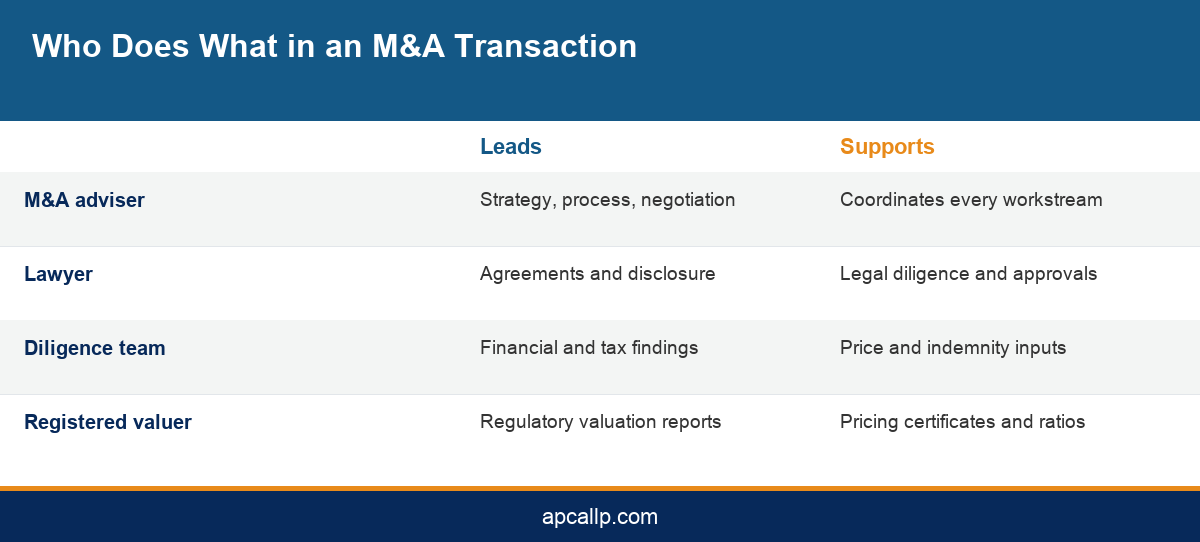
The adviser is the project manager and the negotiator. Lawyers draft the documents, accountants run financial and tax diligence, and valuers sign regulatory valuations. The adviser keeps these workstreams on one timetable and turns their findings into commercial positions.
The broad discipline of mergers and acquisitions is global, but Indian deals carry specific steps: exchange control pricing when non residents are involved, stamp duty on transfers, and sometimes approval from the merger control regulator. A Bengaluru adviser should handle these as routine.
Adviser, Investment Banker or Accountant?
Large deals often use investment banks, which bring buyer networks and capital markets reach. Mid market deals frequently use boutique advisers or chartered accountancy firms with deal teams, which bring cost efficiency and closer knowledge of the finance function. Our note on investment banking for SMEs explains where each fits.
Why the Finance Function Matters
Most mid market deals stall on numbers rather than strategy. An adviser who understands accounts, tax and reporting can fix issues before the buyer finds them. That is why many Bengaluru founders prefer an adviser with a chartered accountancy base rather than a pure dealmaking shop.
When Bengaluru Companies Need M&A Advisory Services
Founders usually think of M&A advisory services only when a buyer calls. In practice the need appears earlier and in more situations: an unsolicited approach that deserves a structured response, a plan to sell within two years, a strategic partnership that may become an acquisition, or a growth strategy that depends on buying smaller competitors.
An unsolicited approach is the classic trap. A buyer that calls first sets the timetable, frames the price and often asks for exclusivity early. Engaging M&A advisory services at that point lets the founder test the offer against the market, decide whether to invite other bidders and negotiate from a position of information rather than flattery.
Acquisitive companies need the same discipline in reverse. A Bengaluru business planning two or three acquisitions should agree its criteria, valuation limits and integration capacity before approaching targets. Buying well is a repeatable process, and good M&A advisory services help build it rather than treating each deal as a one off.
Signs You Should Engage an Adviser Now
An inbound approach, a board discussion about exit timing, a key investor nearing the end of its fund life, a competitor being sold, or a plan to raise growth capital through a strategic partner. Each one is easier to manage with an adviser engaged before the first serious meeting.
Sell Side Mandates: Preparing and Running a Sale
A sell side mandate starts with a readiness review. The adviser tests the numbers, the contracts and the tax position, and recommends what to fix before going to market. This stage often decides the eventual price.
Next comes positioning. The adviser prepares a teaser and an information memorandum, builds a buyer list and decides whether to run a broad auction or a targeted approach to a few strategic buyers. For specialised Bengaluru technology companies, a targeted process with five to ten credible buyers is often more effective than a wide auction.
Once offers arrive, the adviser compares them on more than headline price: cash at completion, deferred and contingent amounts, conditions, warranties and the buyer's ability to close. It then negotiates the term sheet and manages diligence until signing. Our note on preparing for acquirer scrutiny shows what buyers reject most often.
Exclusivity and Its Risks
Most buyers ask for exclusivity once a term sheet is signed. Exclusivity removes competitive pressure, so the seller should keep it short, tie it to a diligence timetable and insist on a clear path to signing. Long open ended exclusivity periods are where many price cuts begin.
Keeping the Business on Track
Buyers watch trading closely during a live deal. A dip in monthly revenue can trigger a renegotiation. Good advisers protect management time by handling the information flow, so founders can keep running the business.
Comparing Offers Properly
Put every offer on one page: headline value, cash at completion, deferred and contingent amounts, conditions, exclusivity requested, warranty package and evidence of funding. Two offers that look similar on price often differ sharply once the terms are laid side by side, and that comparison is where M&A advisory services earn their place.
Buy Side Mandates: Finding and Pricing a Target
A buy side mandate begins with the acquisition strategy: what capability, market or customer base the acquirer wants, and what it can afford. The adviser then screens targets, makes discreet approaches and assesses fit.
Once a target is engaged, the adviser builds the valuation, coordinates diligence and turns findings into price adjustments, indemnities and conditions. It also plans integration, because the value case usually depends on what happens after completion.
Indian acquirers buying Bengaluru startups often focus on talent and technology, which brings ESOP treatment, intellectual property assignment and key person retention into the centre of the deal. The ESOP and revenue recognition issues startups face are frequently where buy side diligence finds its biggest issues.
Discipline on price matters most when competition for a target is strong. Set a walk away number before negotiations begin, agree it with the board, and revisit it only if diligence reveals genuinely new information rather than simply because another bidder has appeared.
Screening Targets
Good screening starts with clear criteria: size, sector, geography, customer profile and the capability being bought. The adviser builds a long list, filters it against those criteria and approaches a short list discreetly. Early conversations test willingness to sell and cultural fit before any money is spent on diligence.
Building the Value Case
The acquirer should know what it will pay for and why. The value case lists the standalone value of the target, the synergies the buyer expects, the cost of achieving them and the risks. Paying away all expected synergies in the price leaves no margin for integration problems.
How M&A Advisory Fees Are Structured
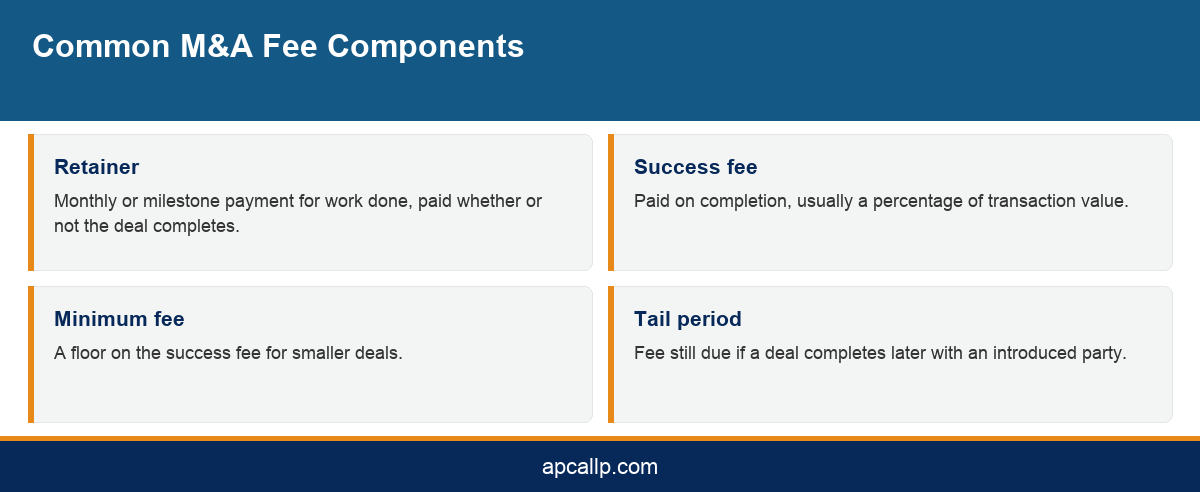
Fees usually combine a retainer and a success fee. The retainer is paid monthly or at milestones and covers the adviser's work whether or not the deal completes. The success fee is paid on completion and is normally a percentage of the transaction value, sometimes with a minimum amount.
Some mandates use tiered success fees, where the percentage falls as deal value rises or rises above a target price. The historical Lehman formula is the best known tiered structure, though modern mandates rarely use it unchanged. Others add a ratchet that rewards the adviser for beating an agreed price.
The fee should align the adviser with your goal. A seller wants the highest value with the cleanest terms. A buyer wants the right price with strong protection. A success fee based only on headline value can push an adviser towards a big number with poor terms, so define how deferred and contingent consideration count.
The Tail Period
Most mandates include a tail period, during which the adviser is still paid if the client completes a deal with a buyer introduced during the mandate. Negotiate its length and limit it to parties the adviser genuinely introduced.
What Is Usually Excluded
Legal fees, diligence fees, regulatory valuations and travel are often charged separately. Ask for a clear list of inclusions and exclusions in the mandate letter, so the total cost of the deal is visible at the start.
The Mandate Letter: Clauses That Matter
The mandate letter is the contract between the client and the adviser. Founders often sign it quickly because the deal feels more important. That is a mistake, because the mandate letter fixes cost, control and flexibility for the whole process.
Read the scope first. It should say whether the adviser will run a sale, a fundraise or an acquisition, which services are included, and what the client must provide. Then check exclusivity, fees, the tail period, termination rights and how conflicts are handled if the adviser also knows likely buyers.
Scope and Deliverables
A good scope lists the deliverables, such as the information memorandum, buyer list, data room, valuation support and negotiation, and the stage at which each is due. Vague scopes lead to disputes about what the retainer covered.
Exclusivity and Termination
Most advisers ask for exclusivity for the mandate period. That is reasonable, but the client should be able to terminate for poor performance after a notice period, and the fee consequences of termination should be written down clearly.
Confidentiality and Conflicts
The letter should require confidentiality and disclosure of conflicts. If the adviser has a relationship with a likely buyer, you need to know before the process starts, not halfway through it.
Deal Documents and Key Negotiation Points
Most deals move from a non binding term sheet to a binding share purchase agreement. The term sheet sets price, structure, exclusivity and key conditions. The share purchase agreement adds warranties, indemnities, limitations of liability, conditions precedent and completion mechanics.
The negotiation usually concentrates on a few points: the price adjustment mechanism, the scope of warranties, caps and time limits on claims, specific indemnities for known issues, and the size and duration of any escrow. An adviser who has seen many deals knows which points are worth fighting for.
Locked Box or Completion Accounts
Under a locked box the price is fixed by reference to a historical balance sheet, and the seller promises no value leaves the business before completion. Under completion accounts the price is adjusted after completion for actual cash, debt and working capital. Each suits different situations, and the choice affects risk on both sides.
Warranties and Indemnities
Warranties are statements about the business. Indemnities are promises to reimburse specific losses. Sellers should limit both with caps, thresholds and time limits, and protect themselves with a thorough disclosure letter.
What Good M&A Advisory Services Deliver After Signing
Signing is not the end of the adviser's job. Between signing and completion, conditions precedent must be satisfied: regulatory approvals, third party consents, pricing certificates, board and shareholder resolutions and sometimes a clean up of statutory filings. Each condition has an owner and a deadline, and the adviser tracks them.
At completion the funds flow must be agreed to the rupee, including payments to sellers, escrow deposits, repayment of debt and fees. After completion, completion accounts or locked box leakage claims are settled, and escrow release dates are managed. Well run M&A advisory services keep the client involved in each step so that money held back is actually recovered.
Managing Conditions Precedent
Conditions precedent are the items that must be completed before money moves. Typical examples are merger control approval where thresholds are met, lender consents, key customer consents under change of control clauses, and valuation certificates. A simple tracker with owners and dates prevents a signed deal from drifting for months.
Funds Flow and Escrow Release
The funds flow memorandum lists every payment made at completion and the account it goes to. Agreeing it in advance avoids last minute confusion. After completion, diarise every escrow release date and the conditions attached, because unclaimed releases are easy to forget once the deal team moves on.
Integration Planning Starts Before Signing
Many acquisitions disappoint because integration was planned after completion. The value case depends on keeping customers, retaining key people and combining systems without disrupting trading. All three need a plan before the deal closes.
A practical integration plan names an owner for each workstream, sets a hundred day timetable and lists the first decisions: reporting lines, banking mandates, payroll, statutory registrations and customer communication. For Indian targets, it also covers changes to directors, auditors and registered office filings.
Sellers benefit too. A credible integration plan reassures the buyer that the value case is achievable, which supports price and reduces the pressure for heavy earn outs. Our note on how outsourced finance support improves deal structuring explains how finance teams bridge the period around completion.
The First Hundred Days
The first hundred days set the tone. Communicate early with employees and customers, keep key people engaged with clear roles and retention terms, merge reporting and banking quickly, and resist changing everything at once. Track the synergies promised in the value case month by month so the board can see whether the acquisition is delivering.
Cross Border Buyers and Regulatory Steps
Many Bengaluru targets attract foreign buyers. When a non resident acquires shares from a resident, the price must follow exchange control pricing guidelines, the transfer must be reported to the RBI within the prescribed time, and only part of the price can be deferred. The detailed rules sit in the RBI Master Direction on Foreign Investment in India.
Larger transactions may also need merger control approval. India now applies a deal value threshold alongside the traditional asset and turnover tests, which brings some technology acquisitions into scope even when the target is small by revenue. The adviser should test this at the term sheet stage.
Our case study on a cross border share transfer shows how pricing certificates, reporting and banking steps are sequenced so that completion is not delayed by paperwork.
Foreign acquirers new to India often start with Invest India's foreign investment overview, which summarises sector caps and entry routes. The transaction specific work, from pricing to reporting, still needs to be planned deal by deal with the adviser and the authorised dealer bank.
Pricing Certificates
When shares move between residents and non residents, the price must meet the fair value tests under the pricing guidelines, supported by a certificate from a chartered accountant, a SEBI registered merchant banker or a practising cost accountant. Obtain the certificate close to the transfer date so it remains current.
Limits on Deferred Consideration
Exchange control rules allow up to 25 percent of the total consideration to be deferred, held in escrow or paid as an indemnity, for a period not exceeding 18 months from the date of the transfer agreement. Earn outs beyond these limits need careful structuring.
M&A Advisory Across Bengaluru, Mumbai and Other Metros
Bengaluru is the centre of gravity for technology deals, while Mumbai remains the base for many private equity funds, listed acquirers and M&A advisory firms. A typical Bengaluru sale may involve a buyer headquartered in Mumbai, Delhi or abroad.
Geography matters less than access and attention. A local adviser can meet management often, understand the team and keep the process moving. A national network helps reach buyers. The strongest mandates combine both.
For Kerala businesses, the same advisory model applies through our Kochi and Kozhikode offices, with Bengaluru deal teams supporting larger transactions. Our transaction advisory case study shows a typical structure.
Working with Mumbai Based Buyers and Funds
Mumbai based private equity funds and listed acquirers typically run disciplined, document heavy processes. A Bengaluru target should expect detailed information requests, formal management presentations and a strong legal team on the other side, and should resource its own side accordingly.
How to Choose an M&A Adviser
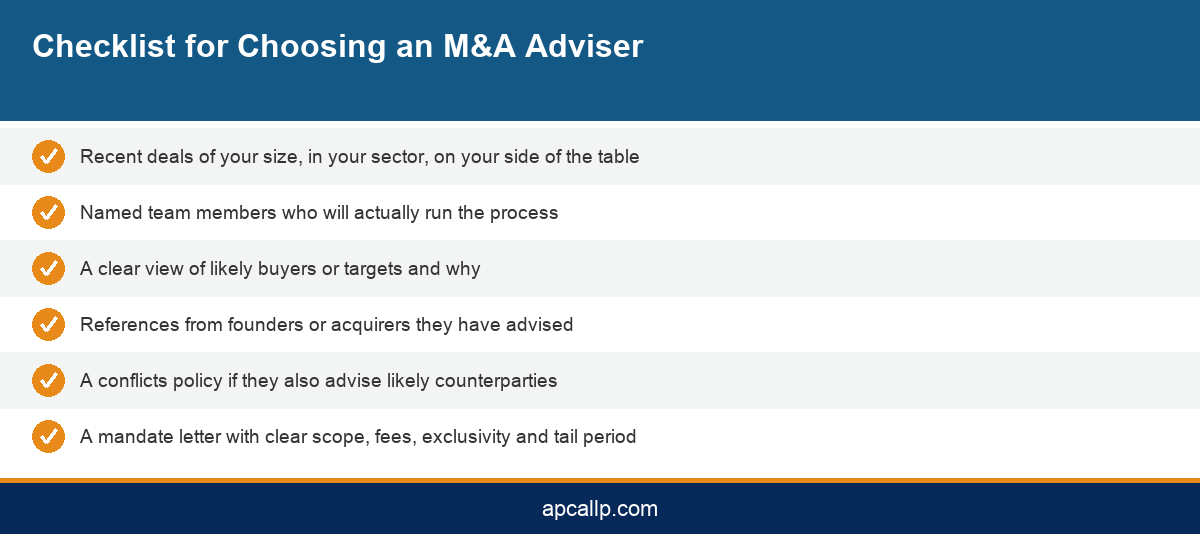
Ask for recent, relevant experience: deals of your size, in your sector, on your side. Lists of top M&A advisory firms in India are a starting point, but the team that will work on your deal matters more than the brand.
Ask how they would run your process, which buyers they would approach and why. Ask for references from founders who sold through them. Check how they handle conflicts if they also advise likely buyers.
Consider chemistry as well. A sale or acquisition will occupy months, involve sensitive information and test everyone under pressure. You need an adviser you trust to tell you unwelcome news early, and one your management team can work with every day.
Finally, read the mandate letter closely: scope, exclusivity, fees, tail period and termination rights. A clear letter is a sign of a disciplined adviser. If you want a second opinion on a mandate you have been offered, speak with our deal team.
Conclusion
Good M&A advisory services change both the price and the terms of a deal. The adviser prepares the business, finds the right counterparties, keeps every workstream on schedule and negotiates protections a first time seller or buyer would miss. Choose on relevant experience, insist on a clear mandate letter, and align the fee with the outcome you want. If a sale, merger or acquisition is on your horizon, contact APCALLP in Bengaluru for an initial discussion.
Frequently Asked Questions
What do M&A advisory services include?

How are M&A advisers paid in India?
What is a tail period in an M&A mandate?
Is a boutique adviser good enough for a mid market deal?
How long does a sell side M&A process take?
Do foreign acquirers need RBI approval to buy an Indian company?
Should founders run a sale without an adviser?
What is the difference between M&A advisory and transaction advisory?
Can an M&A adviser help with a merger between group companies?